
Aircraft Cabin Digital Twins for Airlines, MROs and Lessors
An aircraft cabin digital twin is a structured visual and information-based representation of the aircraft cabin. Depending on the project, it can connect cabin locations with configurations, equipment information, documentation, training resources, operational workflows and approved passenger-facing content in one interactive digital environment.
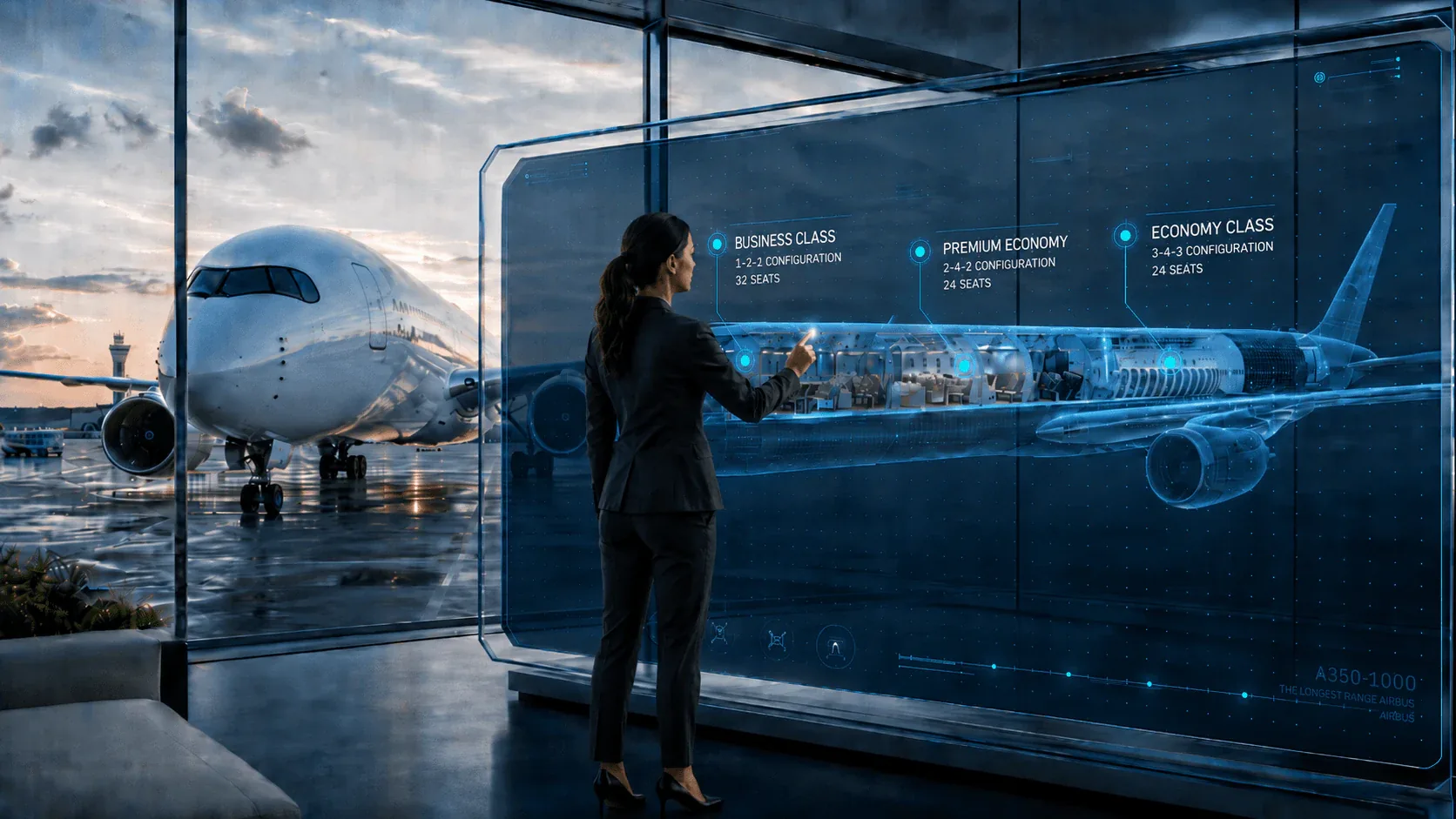
A Digital Aircraft Cabin for Training, Engineering and Operations
Unlike a purely visual aircraft presentation, a cabin digital twin can support operational understanding across training, engineering, maintenance and passenger-facing teams. It gives users a structured way to navigate the aircraft cabin and access the information relevant to their role without requiring physical aircraft access for every briefing or familiarisation activity.
- Interactive 360° cabin walkthroughs with clickable hotspots
- Aircraft seat maps with cabin zones, galleys, lavatories and monuments
- Maintenance familiarization, task information and document links
- Passenger experience data, seat details and onboard service information
- Online, offline, touch display and branded mobile app delivery
What an aircraft cabin digital twin can include
Each aircraft cabin digital twin can be adapted to the aircraft type, operator, configuration, target audience and project requirement. Applications can include passenger communication, crew training, engineering familiarisation, MRO preparation, aircraft transitions, sales and leasing support or complete fleet environments.
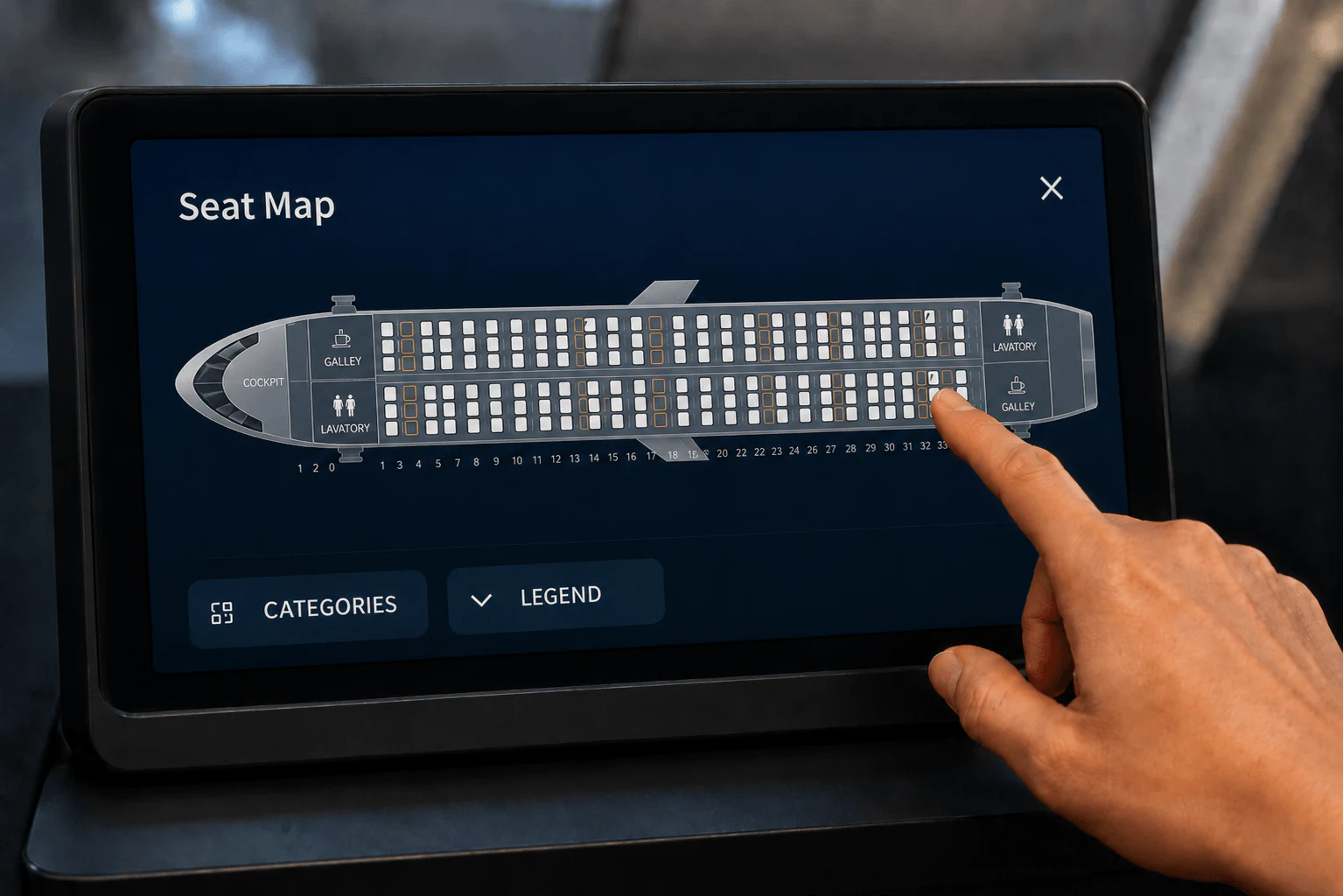
Cabin zones, seat maps and linked aircraft information
Cabin zones, seat maps, monuments and equipment locations can be connected with configuration information, 360° scenes, images, PDF documents, manuals, videos, maintenance references, training resources and other approved project content.
Online, offline and ready for training rooms or exhibitions
Depending on the project, 360air.space can deliver aircraft cabin digital twins through hosted web access, private or customer-controlled environments, offline Windows packages, Android solutions, interactive displays or white-label mobile apps. This allows airlines, MROs, lessors and training organisations to select a deployment model that fits their operating environment.
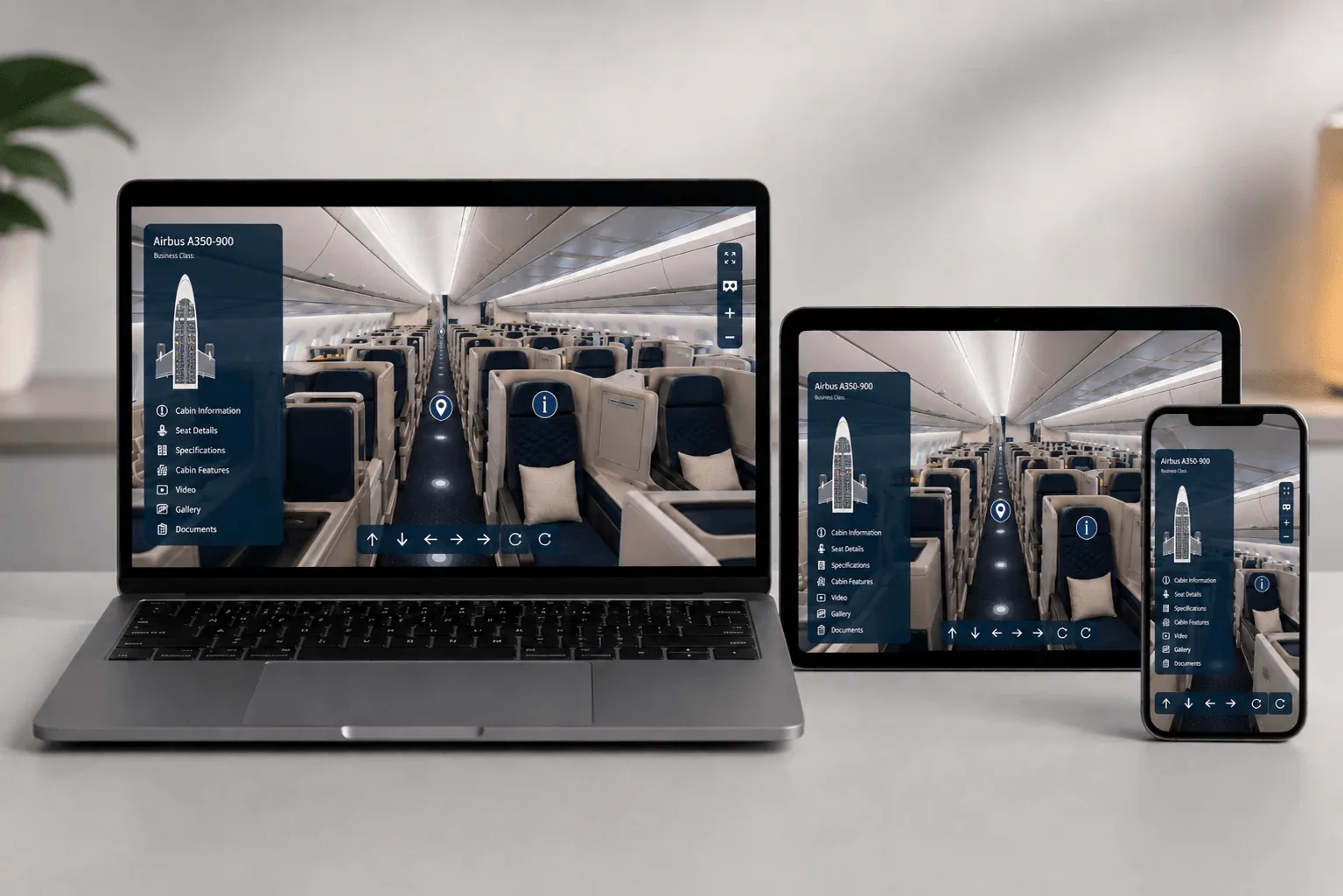
Use cases for aircraft cabin digital twins
One reusable digital aircraft environment can support multiple departments. Cabin crew can use it for aircraft familiarisation and training, while engineering and MRO teams can connect cabin locations with maintenance and technical information. Passenger-facing teams can use the same aircraft foundation with different approved content.
Cabin digital twins can also support retrofit projects, technical handovers and aircraft transitions, sales and leasing by giving airlines, MROs and lessors a structured visual reference for cabin configuration, equipment information, documentation and project communication.
What makes a cabin digital twin different from a virtual tour?
In short: An aircraft virtual tour is primarily a visual navigation experience through the aircraft. An aircraft cabin digital twin uses that visual environment as a structured information layer that can connect cabin zones, seats, monuments and equipment with configuration information, documents, training content and project-specific operational workflows.
An aircraft virtual tour focuses primarily on realistic visual exploration of the aircraft. A cabin digital twin builds on that visual layer by connecting aircraft locations with structured configuration data, equipment information, documentation, training resources or operational workflows.
The exact scope and level of functionality are defined for each project. A solution can range from structured visual cabin documentation to a broader fleet environment with multilingual content, offline delivery, learning modules, analytics or customer-specific integrations where required.
Discuss an aircraft cabin digital twin project
Explore related 360air.space solutions for this aviation use case.